Why Sleep Matters as Much as Exercise
Sports Medicine, Physical Therapy

Whether you're training hard or healing from an injury, here's why quality rest might be the most important thing you’re skipping.
Should you sleep an extra hour or wake up early to hit the gym? Most on-the-go New Yorkers would head to the gym. But cutting your slumber time short actually makes it harder for your body to reap the benefits of exercise. Without a full night’s rest, your body cannot grow stronger and recharge for the next workout session.
There’s a reason New York is called the city that never sleeps. Between work, commuting, working out, and late nights, New Yorkers often shortchange shut eye. That can affect their orthopedic health, especially if they’ve suffered an injury. Exercise is vital for strong bones and muscles, but so is getting seven to nine hours of sleep a night. Both are equally important in achieving a healthy body. It's time to start prioritizing sleep just as much as exercise.
Why is sleep important for health, especially when you are active?
You might think your body goes into “off” mode when you sleep, but it’s actually working hard behind the scenes. During sleep, your body repairs damage, processes the day’s stress, and gets ready to take on tomorrow.
Here’s how sleep supports your body:
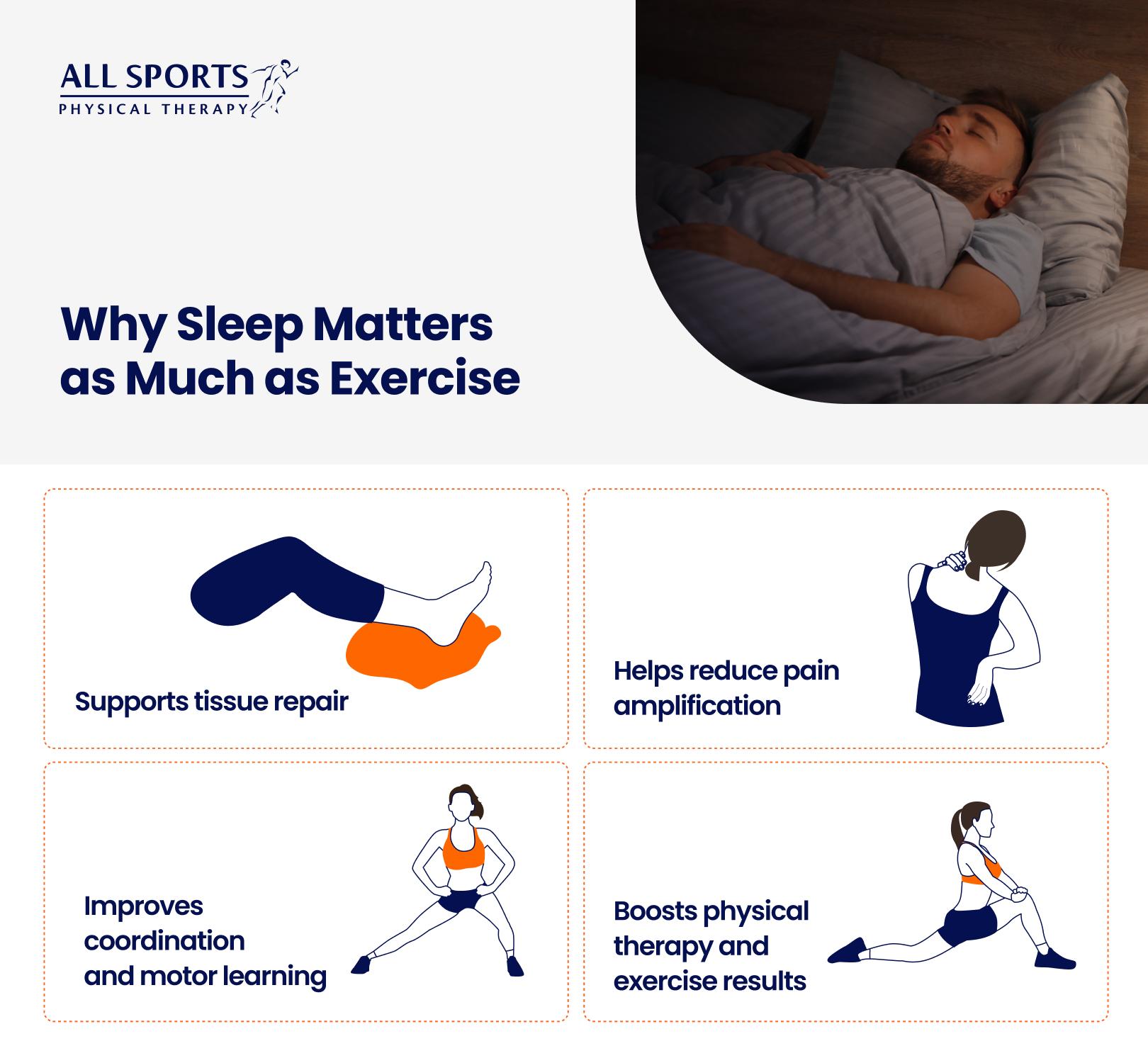
- It lowers your risk of injury. When you’re well-rested, your body is more alert and responsive. Sleep deprivation, on the other hand, leaves you sluggish, making injury during workouts more likely.
- It repairs muscle tissue. Increased blood flow during deep sleep patches up the tiny tears in muscles that normally happen during exercise. In addition, the pituitary gland releases growth hormones that stimulate muscle repair and growth during the night.
- It reduces inflammation. The hormone prolactin is also released during sleep to manage pain and inflammation.
- It helps lower stress. The stress hormone, cortisol, steals energy from the tissues when you’re stressed or exercising strenuously. Sleeping lowers cortisol levels.
- It improves performance. Studies indicate that athletes who prioritize sleep perform better in measures of speed, strength, quick decision making, and reaction time.
- It strengthens skill retention. While you sleep, your brain consolidates motor learning and stores new skills, so you can return stronger, sharper, and more coordinated.
Prioritizing sleep not only helps you perform better in the moment, but also lays the groundwork for long-term health and resilience, especially when it comes to recovery.
The importance of sleep for orthopedic recovery and performance
The importance of sleep applies not only to active people, but to those who may be rehabbing from an orthopedic injury. In fact, you may need to up your sleeping hours while recovering.
Without enough rest, your body may produce more inflammation, which can worsen joint pain and slow healing. When you sleep well, however, your body releases hormones that actively reduce inflammation and promote tissue repair.
Sleep also improves mobility by allowing muscles to recover overnight, reducing stiffness and weakness, making physical therapy sessions more effective. Perhaps most importantly, deep sleep can help shorten overall recovery time. The more restorative sleep you get, the more opportunity your body has to release healing hormones and rebuild damaged muscles and tissues.
Whether you're an athlete or recovering from an injury, sleep is one of the most powerful tools you have. But to understand just how powerful, it helps to know what happens during each stage of sleep.
What stage of sleep is most important?
You cycle through four stages of sleep every night, each serving a specific function. These stages are grouped into two categories: non-rapid eye movement (NREM) and rapid eye movement (REM). All work together to ensure a good night’s sleep.
- Stage 1 (NREM). The first and lightest phase of sleep begins just as your head hits the pillow and lasts a few minutes.
- Stage 2 (NREM). Your sleep deepens as your brain waves slow down. You’ll spend about 45% of your sleeping hours in this stage, the longest of any phase.
- Stage 3 (NREM). This is the time your body starts to repair itself and strengthen your immune system. It’s also the most important and deepest stage of sleep. Adequate Stage 3 NREM helps you wake up refreshed and rested. A lack of Stage 3 NREM sleep leaves you tired and irritated even if you slept a full eight hours.
- Stage 4 (REM). During REM sleep, your brain produces vivid dreams as your brain activity is similar to your waking hours. Your muscles are temporarily “paralyzed,” but your eyes move and you can still breathe. REM and Stage 3 NREM are believed to be essential for memory, creativity, and cognitive thinking.
With a better understanding of what’s happening while you sleep, you can start to make more intentional choices that support deeper, higher-quality rest—even in a busy, high-energy place like New York City.
Practical sleep strategies for NYC life
New York may be the city that never sleeps, but that doesn’t mean New Yorkers should never rest! A few changes to your bedtime routine can make all the difference in how you wake up the next morning.
- Create a restful environment. Make sure your sleeping area is dark, cool, and quiet. One trick to make a city apartment more restful is to hang thick curtains to cut down on city noise and light.
- Practice good sleep habits. Go to bed and wake up around the same time. Turn off all electronic devices before slipping under the covers.
- Avoid alcohol and caffeine. Both make getting to sleep and staying asleep more difficult.
- Relax before bed. Take a relaxing bath, read a book, or meditate to get you into a calm state.
- Gently exercise. Hard-core workouts are too stimulating before bedtime. But a calming walk can de-stress your body and get you ready for bed.
- Make your bed comfortable. Invest in a supportive mattress and pillow. Sleep in a position that keeps your spine in a neutral position. If you’re nursing an orthopedic injury, sleep in a way that doesn’t aggravate the injury. For back pain, put a pillow under your knees if you sleep on your back. Side-sleepers can put a pillow between their legs.
By weaving better sleep habits into your daily routine, you’ll not only feel more energized, you’ll also give your body the recovery time it needs to stay strong and injury-free.
Make good sleep hygiene a part of your active lifestyle
At All Sports Physical Therapy, our team works with patients on improving their overall health and athletic performance. We focus on physical therapy and other treatments to get you back in the game. But we also stress the importance of sleep in recovery and maintaining your physical and mental well-being. Sleeping soundly repairs sore muscles and readies your body for the next workout.
If you’re feeling tired and achy all the time from exercising, you may not be getting the shut-eye your body demands. We offer a comprehensive treatment plan emphasizing physical therapy and proper rest. Let us help you balance your exercise with quality sleep for a healthier you. Contact us today.
FAQs
Why is sleep important for health if I am already exercising?
Sleep allows your body to repair muscles, reduce stress, and decrease inflammation. It does so by releasing hormones to stimulate tissue growth, counter stress hormones, and tamp down inflammation and pain. Combined with exercise, sleep can improve your strength and overall health.
What stage of sleep is most important for recovery?
All four stages play a part in healing and recovery. The latter two stages, Stage 3 NREM and REM, are the deepest phases that produce the most restorative sleep. During Stage 3 NREM, the body releases the hormones for muscle repair and inflammation reduction.
What is the importance of REM sleep for pain and healing?
Like the stage before it, REM provides the deep sleep your body needs to regrow muscles and boost the immune system. REM also creates those vivid dreams you remember and can increase your cognitive and creative abilities.
Can poor sleep make my workouts feel harder and increase injury risk?
Absolutely. Without enough rest, your body tires more easily and reacts more slowly. That combination makes it harder to hit your fitness goals and easier to get injured. On the flip side, well-rested athletes tend to perform better across the board.