Post-Workout Pain? Here's What to Know
Workout Injuries, Sports Medicine
Post-workout soreness is common, but it is not always easy to tell what is normal. Here is how to spot DOMS, ease discomfort, and recognize signs of injury.
You left your gym session feeling fantastic even after bumping up your weights and adding a few extra reps. So why, a day later, do your legs feel stiff and sore and walking across the room suddenly feels like work.
What you are experiencing is common. Muscle soreness after a workout, especially after you push yourself harder than usual, is often a sign that your muscles are adapting. With rest and a brief reset, soreness typically eases within a day or two, and you can get back to your normal routine.
Is pain after a workout good?
Muscle soreness after a workout may not feel great, but it is usually not a reason for concern. During exercise, muscle fibers develop tiny amounts of stress. As those fibers recover, your muscles rebuild stronger.
This condition is called delayed onset muscle soreness, or DOMS. It has several common characteristics.
- Begins 12 to 24 hours after a workout
- Soreness and stiffness focused in the muscle groups worked during that session, such as legs or arms
- Muscles may feel tender to the touch or weak
- Movement is possible, but range of motion is limited
- Typically lasts a few days and improves with rest and gentle stretching
Not feeling sore after a workout does not mean your workout did not work. Soreness often shows up when you increase intensity or try a new movement and your muscles are adjusting. On the other hand, you may have pushed too far if you cannot walk normally, lift your arms, or complete everyday activities.
What causes muscle pain or DOMS after a workout?
DOMS often appears when you increase the intensity of your workout, such as running an extra mile or lifting heavier weights. It can also happen when you start a new exercise program or try a new sport. Your muscles need time to adapt to new demands, so soreness may linger briefly.
Some movements are more likely to cause DOMS. These are called eccentric exercises. They involve tensing a muscle while it lengthens.
Examples include:
- Lowering your arm during a bicep curl
- Lowering down from a pull up
- Walking or running downhill
- Lunges
- Landing from jumps
DOMS is different from acute muscle soreness after a workout. Acute soreness is felt right away. After an intense workout, waste products such as lactate and hydrogen ions can build up in the muscles. That soreness typically fades within about two hours.
Post-workout DOMS vs. injury
Muscle soreness after a workout may slow your routine, but it is usually not serious. Simple approaches can help you feel better within days.
Pain that lasts beyond a few days, or soreness paired with other concerning symptoms, can suggest an injury. In those cases, seek guidance from an orthopedist or a physical therapist to confirm whether something beyond normal post workout soreness is going on.
To help you tell the difference between normal post workout soreness and a potential injury, here are a few key signs to look for.
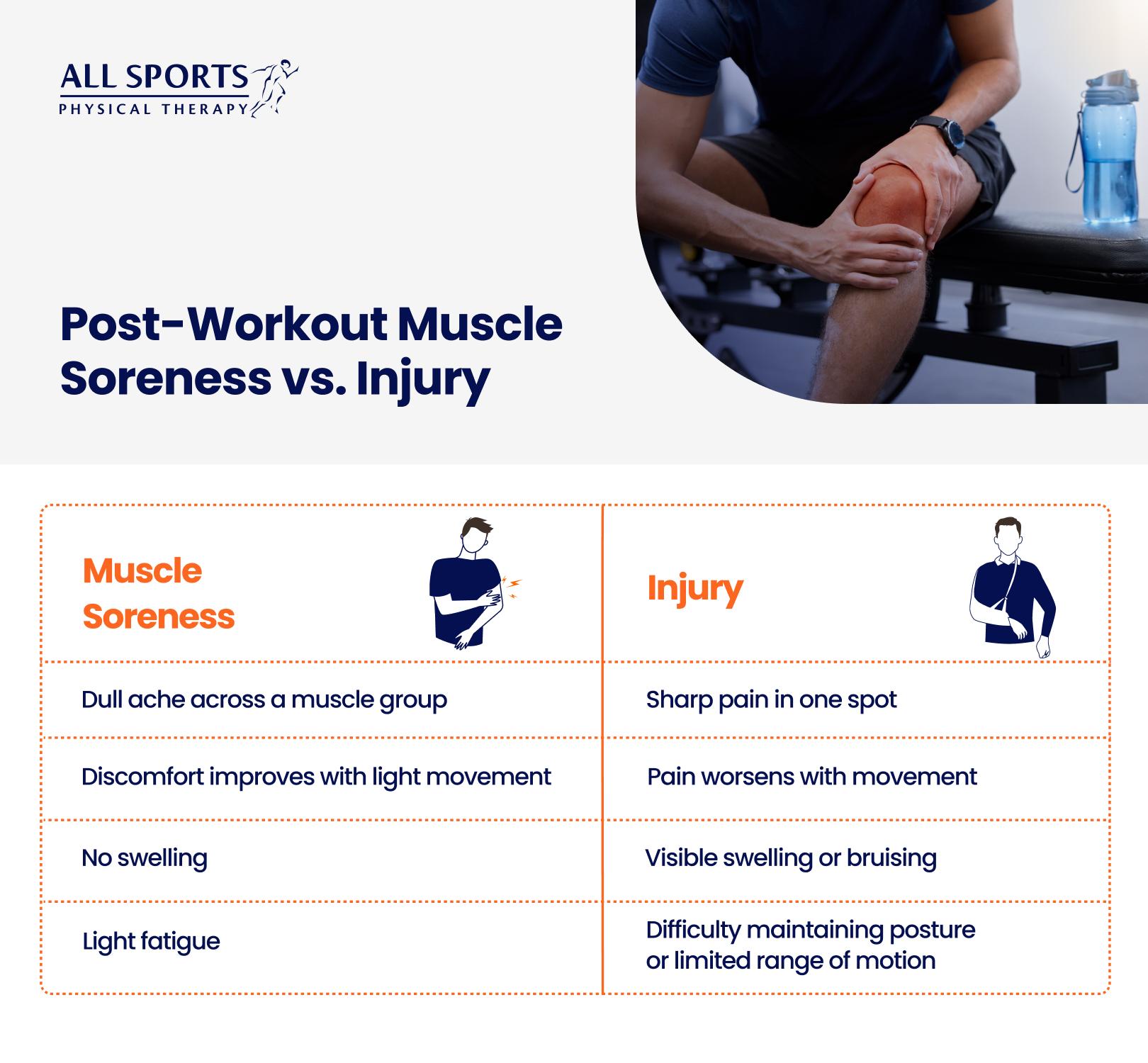
Muscle soreness or DOMS
- Affects muscles such as the biceps, triceps, and abs
- Muscles feel tight and achy
- Begins 12 to 24 hours after a workout
- Fades in two to three days
- Improves with light activity and stretching
Injury
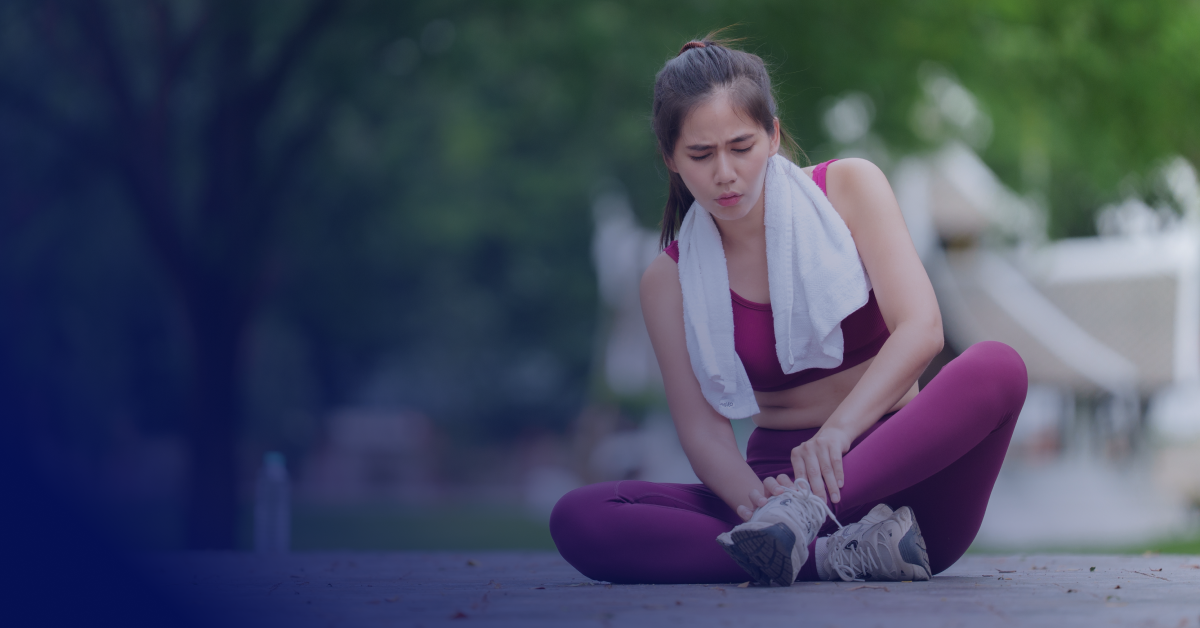
- Often affects a joint such as the ankle, knee, or hip
- Sharp pain that appears immediately
- Constant pain that does not ease
- Swelling or inflammation around the joint
- Limits movement
How to relieve muscle pain after a workout
DOMS can be a normal part of vigorous exercise, and it should not disrupt your workouts for long. Still, it helps to step back briefly. Pushing through pain without giving muscles time to recover can raise the risk of strains, fatigue, and injury.
It is tempting to avoid movement until soreness fades, but staying completely still can make muscles tighten further. Instead, use simple recovery steps to help your body loosen up and heal.
- Do light activities. Skip intense training for about 48 hours. Switch to less strenuous movement, such as walking and gentle stretching, until soreness improves.
- Try hot or cold therapy. Use a cold compress to reduce pain and inflammation. Heat can increase blood flow and help loosen tight muscles.
- Massage the muscles. A massage, self massage, or foam rolling can reduce tension and help release tight spots.
- Apply a topical analgesic. Choose one with menthol or arnica.
- Take a magnesium supplement. This nutrient can reduce inflammation and relax the muscles. Always check with your doctor before taking a supplement,
- Drink plenty of water. Hydration supports recovery and overall muscle function.
When to see a healthcare professional
If these at-home treatments fail to bring relief, you may need further evaluation. Book an appointment with a healthcare professional if you notice these symptoms:
- Pain lasting more than a week
- Sharp, persistent pain
- Severe swelling around a muscle or joint
- Dark urine
Muscle soreness after a workout? We’re here to help
Muscle soreness after a workout is common and can be a normal part of building strength. But if soreness keeps you from training, a physical therapist can help identify the cause and recommend a plan to recover and prevent it from coming back.
The team at All Sports Physical Therapist has helped many athletes manage post workout soreness and improve training results. We can help you too with therapies and practical guidance to reduce soreness and keep you moving. Contact us today.
FAQs
Is pain after a workout good or a sign I overdid it?
It can be both. Soreness often means you pushed a bit harder than usual, which creates small amounts of stress in muscle fibers. As those fibers recover, muscles rebuild stronger. However, soreness that prevents normal movement or gets worse instead of better may mean you overdid it.
What causes muscle pain after a workout if I did not change my routine?
It may be related to the type of movement you did. Eccentric exercises, which involve tensing a muscle while it lengthens, are especially likely to cause post workout soreness. Lowering yourself from a pull up is one example.
How do I relieve muscle pain after a workout quickly?
Cold therapy can ease soreness and inflammation, while heat can help loosen stiff muscles. A topical analgesic may provide temporary relief. Light movement also helps, such as walking and gentle stretching.
How long should muscle pain after a workout last?
DOMS, or delayed onset muscle soreness, typically begins 12 to 24 hours after a workout and lasts about two to three days.
When is pain after a workout a sign of injury?
Pain centered in a joint that lasts more than a week can signal an injury. Severe swelling, dark urine, or sharp, persistent pain are also red flags. Seek a medical evaluation.