The Benefits of Postpartum Physical Therapy
Physical Therapy, Back Injuries, Hip Injuries
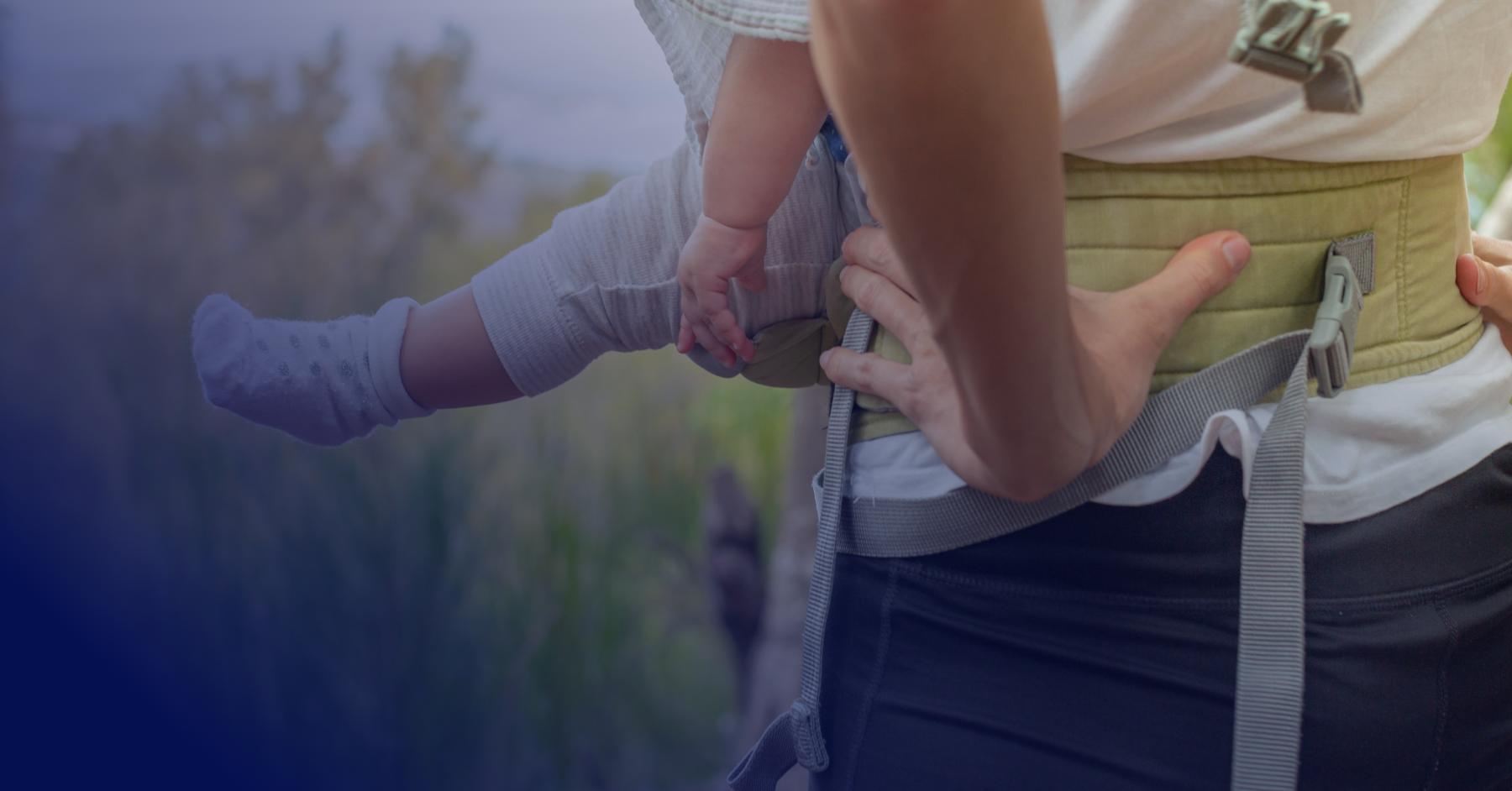
From pelvic floor discomfort to back pain and diastasis recti, postpartum symptoms can make the “fourth trimester” feel harder than it needs to be. Postpartum physical therapy can help you rebuild strength, reduce pain, and return to everyday movement and exercise in a way that supports healing.
Bringing home a new baby is a huge shift, and your body is adjusting right along with your routine. As you recover and settle into feeding, lifting, and long days on your feet, you may notice back pain, pelvic floor discomfort, or a loss of core strength.
Some of these changes are related to the pelvic floor and may benefit from specialized postpartum or pelvic floor physical therapy. Others are more orthopedic in nature, including back, hip, neck, and shoulder strain from the physical demands of newborn care. The good news is that physical therapy can help on both fronts. With guidance from your obstetrician and a physical therapist, many mothers can begin gentle, targeted work early in the postpartum period.
What is postpartum physical therapy?
The postpartum period is often referred to as the “fourth trimester.” During this time, many women notice changes in how their body functions, as well as discomfort centered in the abdominal or pelvic area.
While a normal consequence of giving birth, these symptoms can affect daily life:
- Pain in the lower back, hips, pelvis, ribcage, and diaphragm
- Urinary incontinence
- Pressure or a feeling of “falling out” in the pelvic floor
- Decreased core strength
- Limited movement
- Stomach “pouch” due to abdominal muscle separation
- Painful sex
- Cesarean scar sensitivity
Using exercise and other techniques, a comprehensive postpartum physical therapy program addresses all those issues by:
- Strengthening the pelvic floor
- Healing pelvic organ prolapse, when needed
- Enhancing core muscle strength
- Increasing bladder control
- Decreasing sexual pain due to a vaginal tear or episiotomy
- Reducing scar pain after a C-section
- Treating possible diastasis recti, or the separation of the abdominal muscles
- Helping new mothers with individualized physical and emotional support
What does postpartum physical therapy help with?
Postpartum physical therapy focuses on reducing the discomfort mothers face after giving birth. Since each mother’s experience is different, a tailored care plan will take into account the specific areas of existing symptoms, health history, and physical goals.
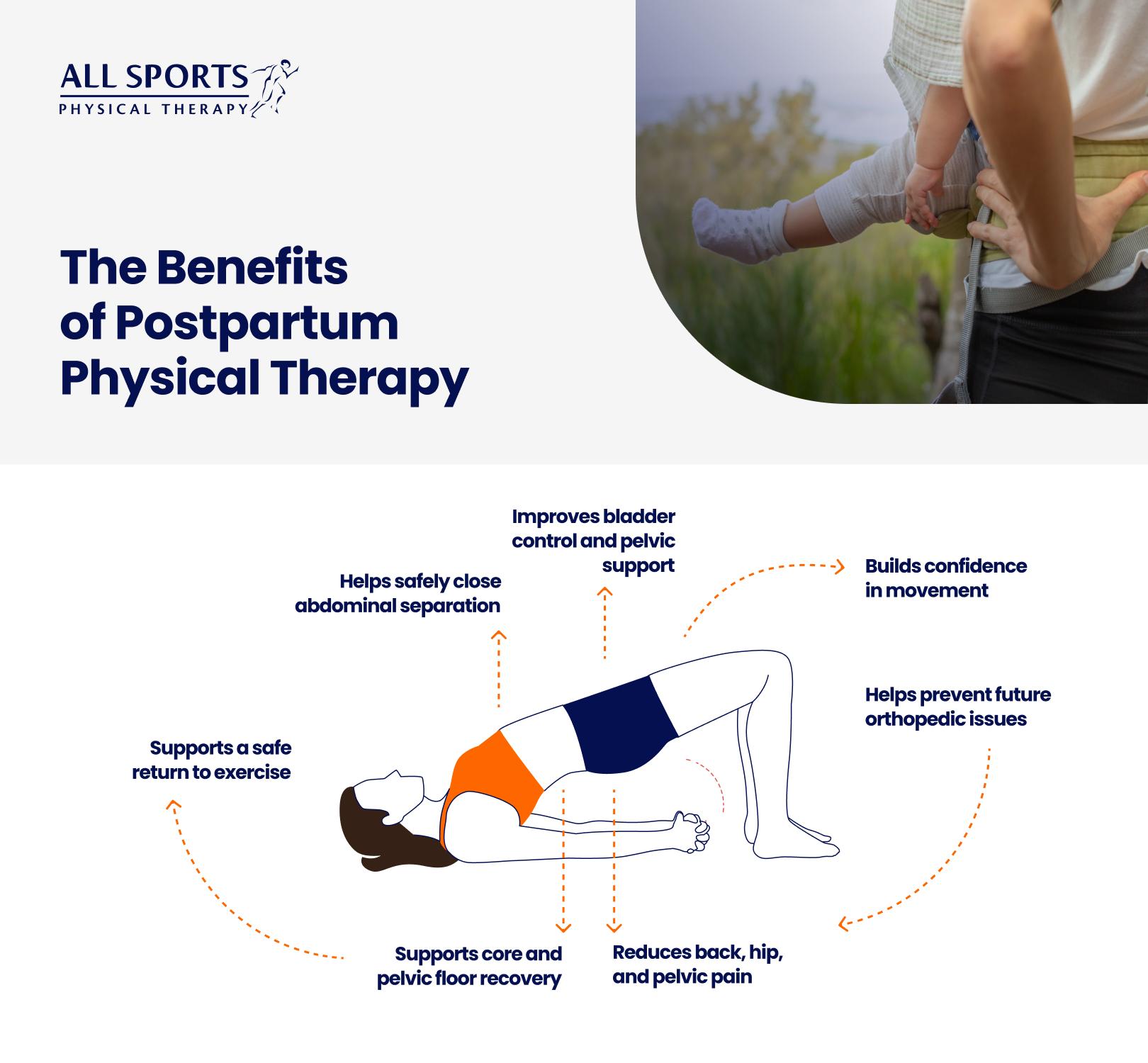
Rebuilding core and pelvic floor strength
During delivery, your pelvic floor (a bowl-shaped group of muscles stretching across the bottom of your pelvis) relaxes and expands to allow the baby to pass through the vaginal canal. Physical therapy can strengthen and retrain those muscles.
Improving bladder control and pelvic support
Urinary incontinence is a common postpartum concern. Strengthening and coordinating the pelvic floor can reduce leakage and improve support.
Relieving back, hip, and pelvic pain
Many mothers experience an aching feeling in the lower abdomen and back. The pain spans from below the belly button to between the hip bones. It can also radiate up your back to around your rib cage and diaphragm. Symptoms often worsen with walking, climbing stairs, sitting, or standing up from a chair. Postpartum physical therapy can help reduce pain and improve movement.
Healing abdominal separation safely
A separation of the abdominal muscles, known as diastasis recti, is a separation of the abdominal muscles that can cause a gap, bulge, doming when coughing or sitting up, or inward “caving” when lying down. It often resolves after pregnancy. If it doesn’t, targeted exercises, proper breathing techniques, and massages under the direction of a physical therapist and physician can safely treat it without putting undue strain on the abdominal muscles.
Improving posture and everyday mechanics
Postpartum physical therapy teaches safer ways to lift, carry, and feed your baby so your joints and muscles are under less strain. For example, when lifting a baby in and out of a car seat, stand close, keep your back neutral, bend your knees, and use your legs and core to support the movement.
Facilitating a safe return to exercise
Active New York mothers always want to return their exercise routine as soon as possible. A physical therapist, in coordination with her obstetrician, can map out a graduated return to activity. In the first weeks following delivery, gentle walking and strengthening exercises are encouraged along with pelvic floor exercises. You can boost the intensity of the workouts as you progress through the program.
Supporting emotional well-being
The benefits of physical therapy go beyond physical fitness and pain relief. Physical therapy can provide emotional support and guidance as you adjust to postpartum life.
When to start postpartum physical therapy
The general rule is to wait six weeks after delivery to start postpartum physical therapy or any strenuous activity. However, you may start sooner or a bit later depending on assessment of your strength, flexibility, and the status of your pelvic floor muscles by your obstetrician and physical therapist.
In general, early postpartum guidelines often include:
- Beginning gentle pelvic floor and abdominal retraining to support bladder control
- Setting aside 10 to 15 minutes a day for low-impact movement, such as walking with the stroller
- Practicing steady breathing during exercise and avoiding breath holding
A week-by-week treatment guide
Postpartum physical therapy typically progresses in stages, with your physical therapist monitoring symptoms and readiness before advancing. Every postpartum exercise plan may look different, but here are some exercises you can expect around standard timelines.
1 to 6 weeks after birth
- Pelvic floor exercises
- Posture improvement
- Gentle strengthening exercises
- Walking at a comfortable pace
6 to 12 weeks after birth
- Low-intensity body strengthening exercises (lunges, squats, light weights)
- Gentle stomach crunches
- Low impact aerobic workouts (cycling, walking)
12 weeks after birth
- Gradual increase in exercise intensity
- Gradual increases in jogging or running distance
- Cycling hills as tolerated
Cesarean delivery is major abdominal surgery. As such, mothers who have undergone a C-section may have to wait 6 to 8 weeks before returning to full activities. Postpartum physical therapy for those mothers emphasizes minimizing scar sensitivity, reducing adhesions, and improving overall mobility, as well as rebuilding pelvic floor and core strength.
At-home postpartum exercises
Once your obstetrician and physical therapist have cleared you to begin postpartum exercise, at-home movement becomes an important part of your recovery. In-clinic sessions help you learn proper form and progress safely. The consistency of what you do between visits is what typically builds strength over time.
Your physical therapist will recommend a short home program based on your delivery, symptoms, and goals. Many early postpartum exercises are gentle, low-impact, and designed to fit into daily life.
As you ease back into movement, you may notice mild muscle fatigue or light soreness, especially in the hips, glutes, or core. That can be normal. What you should not feel is sharp pain, a heaviness sensation, or increasing pelvic pressure. Some things to keep in mind:
- Stop if you feel sharp pain, heaviness, or increased pelvic pressure
- Choose slow, controlled movement over intensity
- Exhale during effort and avoid holding your breath
- If you have diastasis recti or are still healing from a C-section, follow your physical therapist’s timeline before adding core work
Below are a few common postpartum exercises that are often introduced once you have been cleared. Your therapist can modify these based on your symptoms and recovery stage.
Beginning abdominal exercises
Perform only if you don’t have abdominal muscle separation.
One heel slide
- Lie on your back with knees bent and feet flat.
- Inhale gently.
- As you exhale, lightly engage your pelvic floor and lower abdominal muscles. Your belly should stay relatively flat, without doming.
- Slowly slide one heel away from your body until the leg is nearly straight.
- Keep hips level and avoid arching your back.
- Slide the heel back to the starting position while maintaining gentle engagement.
- Start with 10 reps per side. Progress to 20 to 30 as it feels easier and your form stays steady.
Hip and back strengthening
Bridging supports the hips, glutes, and core, which can reduce strain on the low back.
Bridging
- Lie on your back with knees bent and feet hip-width apart.
- Inhale to prepare.
- Exhale, engage your pelvic floor and lower abdominals, and press through your heels.
- Lift your hips until your body forms a straight line from shoulders to knees.
- Keep ribs relaxed and avoid flaring your chest.
- Hold for 5 seconds, then lower slowly.
- Do 10 repetitions. Stop if you feel cramping, back pain, or pelvic pressure.
Lower-body endurance
Exercises like wall sits build leg strength for carrying, lifting, and long periods of standing.
Wall sits
- Stand with your back against a wall and feet hip-width apart, about 1 to 2 feet in front of you.
- Slide down until your knees are bent to a comfortable angle, ideally close to 90 degrees.
- Keep knees aligned over the second toe and avoid letting them collapse inward.
- Hold for 20 to 30 seconds while breathing steadily.
- Slide back up to stand.
- Repeat 3 to 5 times. Shorten the hold if you feel knee discomfort.
Upper-back support
This move helps counter the rounded posture many new moms develop during feeding and carrying.
Shoulder blade squeeze
- Sit or stand tall with shoulders relaxed.
- Gently pull your shoulder blades down and back, as if you are tucking them into your back pockets.
- Keep your neck long and avoid shrugging.
- Hold for 5 seconds, then release fully.
- Repeat 10 times.
How postpartum physical therapy supports orthopedic health
Even if you are not seeking pelvic floor specific care, physical therapy can still be an important part of postpartum recovery. Orthopedic-focused physical therapy can help you develop:
- Stronger core and hip muscles to reduce back and hip pain
- Improved mobility in the hips and shoulders
- Better mechanics for lifting, carrying, and feeding your baby to reduce strain
We're here to help you move easier
Newborn care is physically demanding, and postpartum aches can make it harder to get through your day. If you are dealing with back pain, hip pain, shoulder tension, or other orthopedic symptoms, physical therapy can help you feel stronger and move more comfortably.
All Sports Physical Therapy provides orthopedic physical therapy in New York City and can help address common sources of back, hip, and joint pain that show up after pregnancy and delivery. Contact us today to get started. We have several convenient locations.
FAQs
What is postpartum physical therapy treatment?
Postpartum physical therapy is a subset of therapy focusing solely on addressing the unique challenges mothers face after delivery. These issues could involve pelvic floor prolapse and weakness, urinary incontinence, and hip and back pain. A physical therapist prescribes exercises to help patients overcome those issues.
When to start postpartum physical therapy after a C-section?
A C-section is major abdominal surgery, and a full return to activity may take 6 to 8 weeks. However, postpartum physical therapy can often begin earlier with gentle strategies to reduce scar sensitivity, improve mobility, and rebuild pelvic floor strength, depending on your obstetrician’s guidance.
When to start postpartum physical therapy if I have back pain?
Your obstetrician and physical therapist can help determine the best time to begin. Many women can start with gentle walking and basic strengthening soon after delivery. Your progression depends on your symptoms, healing, and how your body responds.
How many sessions of physical therapy for postpartum are typical?
There’s no hard or fast rule because each mother exhibits different symptoms. Generally speaking, patients benefit from 6 to 12 weeks of physical therapy, with weekly or biweekly sessions. After formal sessions, an at-home exercise program is recommended.