Stuck in an Office? Try These Workouts to Do at Your Desk
Physical Therapy
You don't have to wait until after work to squeeze in some exercise. Start at your desk with these easy workouts.
Do you feel tired, achy, and stiff after a long day sitting in front of a computer? You’re not alone. The Bureau of Labor Statistics reports 18.5 million office and administration jobs in the U.S., which means many people spend a good portion of their time typing and reclining in a desk chair.
And that’s not great for your health. Studies have linked a sedentary lifestyle (such as sitting at a desk) with a higher incidence of chronic illnesses.
You already know you should exercise. But when? By the end of the day you’re exhausted. Mornings feel rushed. The good news: you don’t have to wait until 5 p.m. or the weekend to move your body.
These desk-friendly workouts are short, simple, and low-stress—designed for real office life. Most take just a few minutes, and many can be done without leaving your chair. Done consistently, they can help you feel more energized, less stiff, and more focused throughout your day.
Why desk workouts matter
Your body is built to move. Sitting in one position for hours can tighten muscles, reduce circulation, and pull your posture out of alignment. Over time, that contributes to many of the most common office complaints, including:
- Neck pain from leaning your head forward toward the screen
- Lower back stiffness from constant pressure on the spine
- Wrist and forearm strain from repetitive typing and mouse use
- Hip tightness as hip flexors shorten and glutes weaken
- Swollen calves from reduced circulation to the lower legs
- Tense shoulders from hunching and rounding forward
Surprisingly, you don’t have to take part in a long workout to counter those negative effects. Short bursts of movement spaced throughout the workday work just as well in keeping your muscles engaged, your mind sharper, and your body energized.
Safety first: How to move at your desk without risking injury
As with any exercise routine, talk to a doctor before starting—especially if you have an existing injury, joint condition, or chronic pain.
Start slowly and gently. Don’t push into pain. And stop if you feel symptoms such as dizziness, sharp or worsening joint pain, or numbness and tingling. If symptoms don’t improve, consult a medical professional.
Start with correct posture to make every desk exercise more effective:
- Position your feet shoulder width apart, directly beneath your hips
- Tuck your pelvic tone inward and engage your glutes
- Engage your core muscles and line up your torso with your hips
- Loosen and roll your shoulder blades back and and down, keeping your shoulders relaxed
- Maintain your head over your spine and don’t hunch your shoulders
5 quick desk workouts you can rotate through
These mini-workouts are designed to be fast and practical. Aim for 3 to 6 minutes every hour or two, or choose one circuit a few times a day.
Workout 1: Posture and upper-back reset
Goal: Relieve neck/shoulder tension and counteract slumping
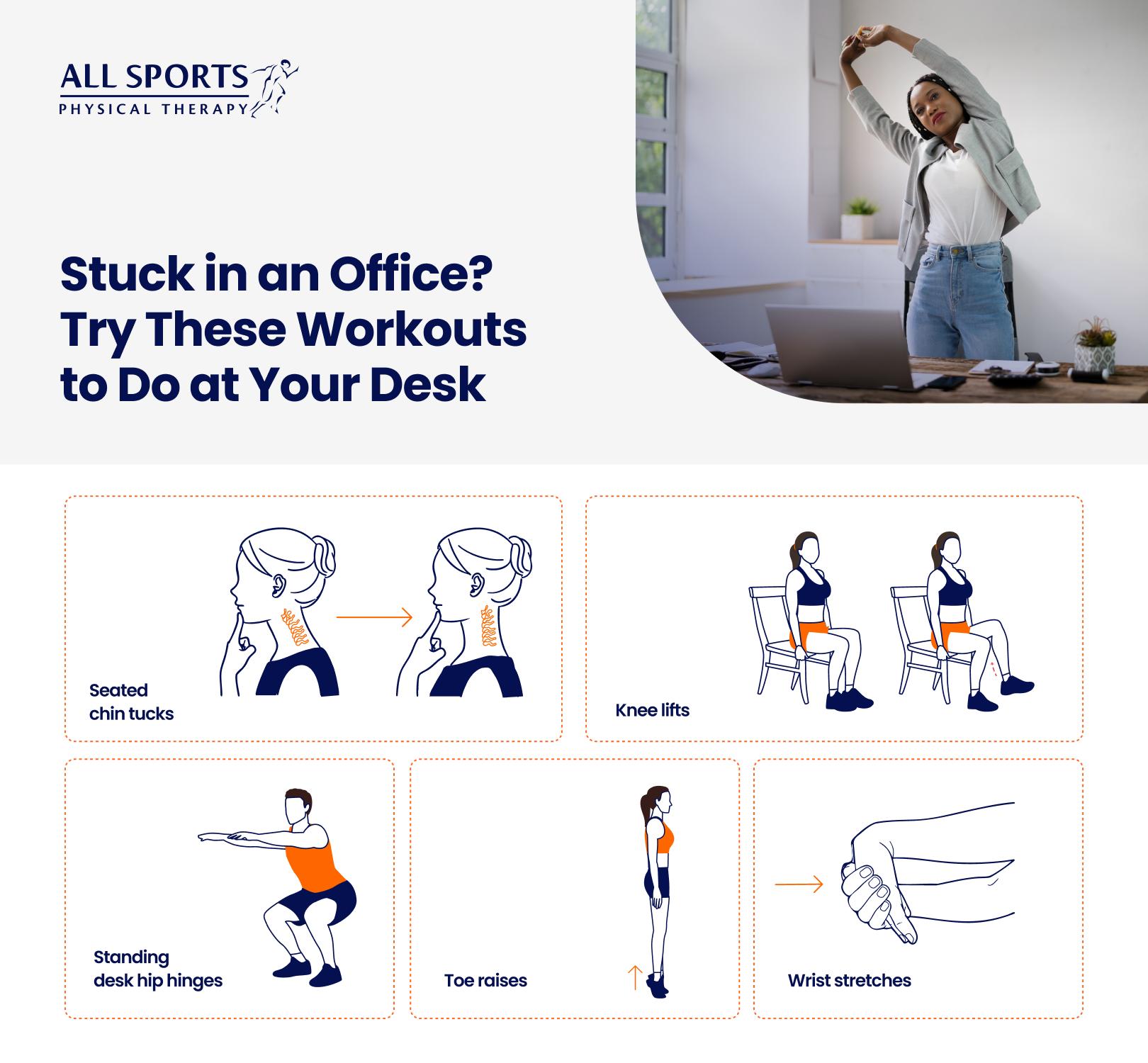
Seated chin tucks
- Sit upright and look straight ahead.
- Place your finger on your chin. Don’t move the finger during the exercise.
- Pull the chin and head straight back until a good stretch is felt at the base of the head and top of the neck.
- Hold for 5 seconds.
- Bring the chin forward again to the finger.
- Repeat for a total of 10 times.
Scapular squeezes
- Bend your elbows at 90 degrees and rest them at your sides.
- Move your elbows and shoulders backward while squeezing your shoulder blades together.
- Relax your shoulders and return to your starting position.
Seated thoracic twist
- Sit upright in your chair
- Relax your shoulders downward and keep your back upright.
- Cross your arms gently over your chest.
- Leading with your arms and shoulders, slowly rotate your upper body to one side.
- Go until you feel a stretch in your upper back.
- Hold the position for 20–60 seconds, then return to the center.
- Repeat on the opposite side, with 10-12 reps per side.
Workout 2: Core-on-a-chair circuit
Goal: Support and engage the spine
Seated knee lifts
- Sit comfortably in your chair with your back straight unsupported by the chair back.
- Lift one knee toward your chest, keeping your back straight.
- Raise your foot about 6 to 10 inches.
- Slowly lower your knee to the ground
- Repeat 10 per side.
Seated marches
- Move your legs back and forth as if you were running.
- At the same time, swing your arms in rhythm with your legs.
- Continue for 30-45 seconds.
Chair-supported plank/push-up
- Place your hands shoulder-width apart on the edge of your desk.
- Walk your feet back, shifting your weight forward until your arms are straight and your body is in a straight line from shoulders to feet.
- To do a plank, keep your core and glutes tight while holding the position for 30 seconds.
- To do a push-up, lower your body toward the desk until your elbows bend to a 90-degree angle. Push away until your arms are straight again.
- Aim for 10 reps.
Workout 3: Hip and glute wake-up
Goal: Lessen hip tightness and lift pressure off the lower back
Seated figure-4 stretch
- Sit in a chair with feet touching the ground.
- Place one foot over the knee, and then gently lean forward.
- Keep your back straight and lean forward from your hips.
- You should feel a stretch along the back side of the hip.
- Hold this position for 20-30 seconds. Repeat three times.
- Switch legs and do the same stretch with the same duration and repetition.
Seated glute squeezes
- You can do this seated or standing.
- Squeeze your glute muscles firmly.
- Hold for 5 seconds and repeat 10-15 times.
Standing leg raises
- Point your toe and extend your leg out straight.
- Lift your leg and hold for five to 10 seconds until you feel a stretch in your calves and hamstrings.
- Switch legs and repeat 5-8 times per side.
Workout 4: Leg routine
Goal: Improve blood flow in the calves and reduce leg heaviness
Ankle pumps
- Sit in a chair with your feet flat on the floor.
- Repeatedly raise your toes and forefoot on both feet.
- Keep your heels on the ground while doing this exercise.
- Repeat for 30 seconds.
Seated leg extensions
- Sit in your chair, with thighs parallel to the ground. Adjust the seat height if necessary.
- Keep your arms at your sides and your back straight. Slowly extend your right leg and keep your foot flexed. Don’t lock your knee.
- Aim to raise your leg as high as you can.
- Return to the starting position.
- Repeat 10 times per side.
Seated calf stretch
- Sit up straight in a chair with both legs bent and feet flat on the floor.
- Slide one leg backwards towards the chair.
- Keep your heel on the ground.
- When you feel a stretch in your calf, hold this position for 15-30 seconds, and switch sides.
Workout 5: Hand and wrist routine
Goal: Reduce keyboard and mouse strain
Hand and finger stretches
- Make a fist and hold it for 30-60 seconds.
- Open your palm and spread your fingers wide.
- Do 4 reps.
Wrist flexor stretch
- Extend one arm in front of you with your palms facing down.
- Bend back your wrist, pointing your fingers up.
- With your other hand, gently bend your wrist farther until you feel a mild to medium stretch in your forearm.
- Hold for at least 15 to 30 seconds.
- Repeat 2 to 4 times on each arm.
Wrist extensor stretch
- Extend one arm in front of you and point your fingers toward the floor.
- With your other hand, gently bend your wrist farther until you feel a mild to moderate stretch in your forearm.
- Hold the stretch for at least 15 to 30 seconds.
- Repeat 2 to 4 times on each arm.
Forearm pronation and supination
- Keep your elbow at your side and bent at about a 90–degree angle.
- Hold a thin object such as a pen or make a fist.
- Slowly rotate your forearm so your palm faces up and hold for 15 to 30 seconds.
- Rotate your palm down and hold for 15 to 30 seconds.
- Repeat 2 to 4 times on each arm.
How to build a simple workout habit
Desk workouts work best when they become routine. Start small and keep it consistent.
- Set a reminder: every hour or two for 2–5 minutes
- Pair it with habits (after emails, before meetings, when refilling coffee)
- Keep a short list of favorite moves
- Focus on consistency, not intensity
- Ask a coworker to join you for accountability
The goal is to squeeze in these workouts into your daily routine.
Signs you should get extra support
Desk exercise can help improve mobility and reduce stiffness, but it’s not always enough. You may need professional support if you experience:
- Pain lasting more than a couple weeks
- Recurring numbness or tingling
- Headaches tied to poor posture and neck stiffness
- Symptoms that worsen with movement
If desk workouts aren’t helping, a physical therapist can evaluate your symptoms and build a targeted plan.
Keep your work routine active
Getting your body in motion at your desk can be a powerful tool in relaxing muscles, fighting joint stiffness, and invigorating your body and mind. If you’re not sure where to start, the physical therapists at All Sports Physical Therapy can show you the best desk-based exercises and how to build a beneficial routine while you work. Schedule an appointment with us to learn how we can help you prioritize your health and wellness, even at work.
FAQs
How often should I do desk workouts?
Ideally, aim for 3 to 6 minutes every hour or two, especially if you sit for long stretches without getting up. Even small movement breaks can help improve circulation, reduce stiffness, and reset your posture.
If that frequency feels unrealistic, start with two to three desk workout breaks per day, then build from there. A good rule of thumb is: if you’ve been sitting for more than an hour, your body will benefit from a quick reset.
Can desk exercises actually improve posture?
Yes, but consistency matters. Desk workouts help strengthen the muscles that support good posture (especially the upper back, core, and glutes) while loosening areas that tend to tighten up from sitting (like the chest and hip flexors).
What’s the best desk workout for low-back pain?
Lower back discomfort often happens because the spine is under steady pressure while sitting, especially if your core and glutes are underactive or your hips feel tight.
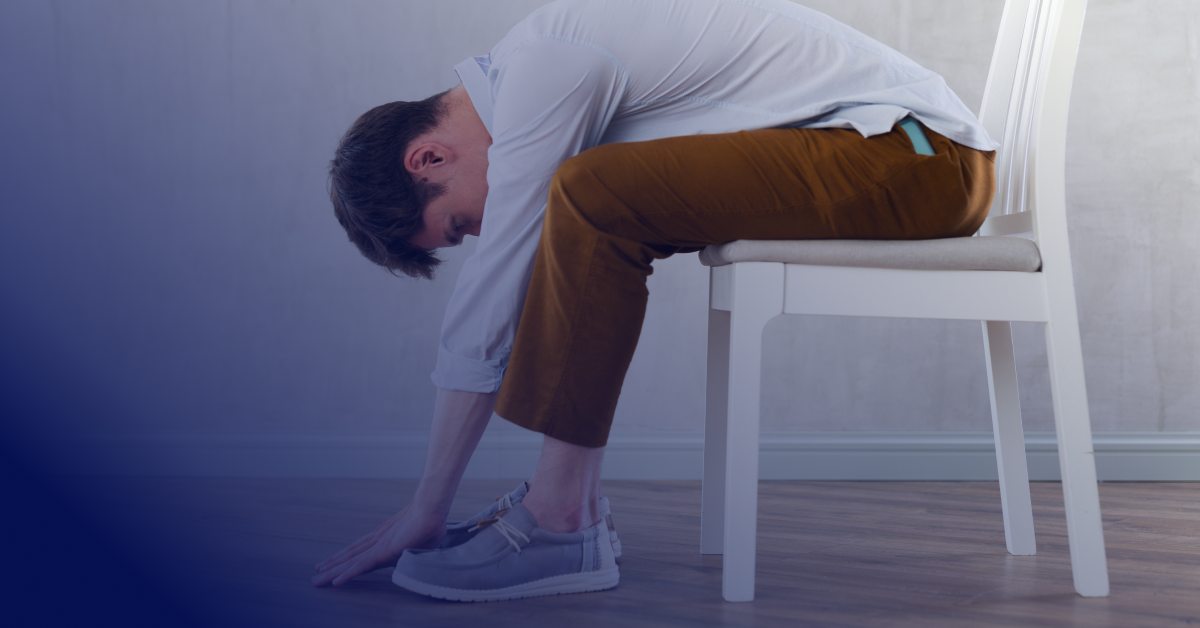
If you want a single stretch, try this seated forward fold:
- Sit with feet hip-width apart
- Keep your back long and hinge forward gently from the hips
- Let your arms relax toward the floor
- Hold for 15–30 seconds, then slowly return to upright
If your back pain is sharp, radiating, or worsening, it’s best to stop and consult a professional for assessment.
Are chair workouts safe for beginners?
For most people, yes. Chair-based workouts are often safe and beginner-friendly because they’re low impact and easy to modify. If you’re new to exercise, choose 1–2 short routines per day and build gradually. The goal is progress, not intensity.
What if I feel pain during an exercise?
Pain is a signal to stop. Take a break for a day or two. If the pain returns, see a physical therapy or orthopedist for further evaluation.