Weight-Bearing Exercise and Bone Health: What the Research Actually Shows
Workout Injuries
“Do more weight-bearing exercise” is one of the most common recommendations people hear when they start thinking about bone health. It sounds straightforward, but it leaves out an important question: what kind of exercise actually gives bones enough of a stimulus to matter?
Walking counts as weight-bearing exercise. So do running, stair climbing, dancing, tennis, and many other activities performed while supporting your body weight against gravity. Strength training adds another form of load through free weights, machines, resistance bands, or body-weight exercises. Research suggests that both can play an important role in maintaining bone health, but simply being on your feet is not the whole story. [1][2]
The type of exercise, the amount of resistance, how consistently you train, and your current bone health all affect what an appropriate program looks like.
Why Exercise Affects Bone in the First Place
Bone may feel solid and unchanging, but it is living tissue that continually responds to the demands placed on it. Mechanical loading from exercise creates forces through the skeleton, while resistance training also requires muscles to pull against their bony attachments.
Over time, regular exercise can help maintain bone strength while improving muscle strength, balance, and coordination. Those last benefits are particularly important because fracture prevention is not only about bone mineral density. Reducing the likelihood of a fall also reduces the opportunity for a fragile bone to fracture. [1]
This is why a well-rounded bone health program usually includes more than one form of exercise. Weight-bearing activity challenges the skeleton, resistance exercise strengthens both muscle and bone, and balance training can improve stability and help reduce fall risk. [1]
What Counts as Weight-Bearing Exercise?
Weight-bearing does not mean you have to exercise while holding dumbbells. It means your bones and muscles are working against gravity while supporting your body weight.
Examples include:
- Brisk walking
- Stair climbing
- Jogging or running
- Dancing
- Tennis, pickleball, and other racket sports
- Hiking
- Many standing aerobic activities
Cycling and swimming are excellent forms of cardiovascular exercise, but they are not considered weight-bearing in the same way because the bicycle or water supports much of your body weight. That does not make them poor exercises. It simply means they provide a different type of physical stimulus.
For someone building an exercise program around bone health, that distinction matters. You do not necessarily need to give up activities you enjoy, but you may want to include exercises that specifically place appropriate load through the skeleton as well.
Does Walking Really Build Stronger Bones?
Walking is good exercise. It is accessible, helps maintain cardiovascular fitness, keeps people active, and is recommended by the National Institutes of Health as a weight-bearing activity. [1] What the research does not support is the idea that walking alone is necessarily the most effective exercise prescription for improving bone mineral density.
A systematic review examining walking programs in perimenopausal and postmenopausal women found no significant overall improvement in lumbar spine or whole-body bone mineral density from walking alone. Longer-duration walking programs showed some benefit at the femoral neck, but the results across skeletal sites were limited. [4]
That does not mean walking is pointless for bone health. For a previously sedentary person, walking may be an appropriate starting point and can provide substantial benefits beyond bone density. The research simply suggests that if improving or preserving bone strength is a primary goal, walking is better viewed as one part of a broader program rather than the entire program.
Resistance Training Deserves a Bigger Role
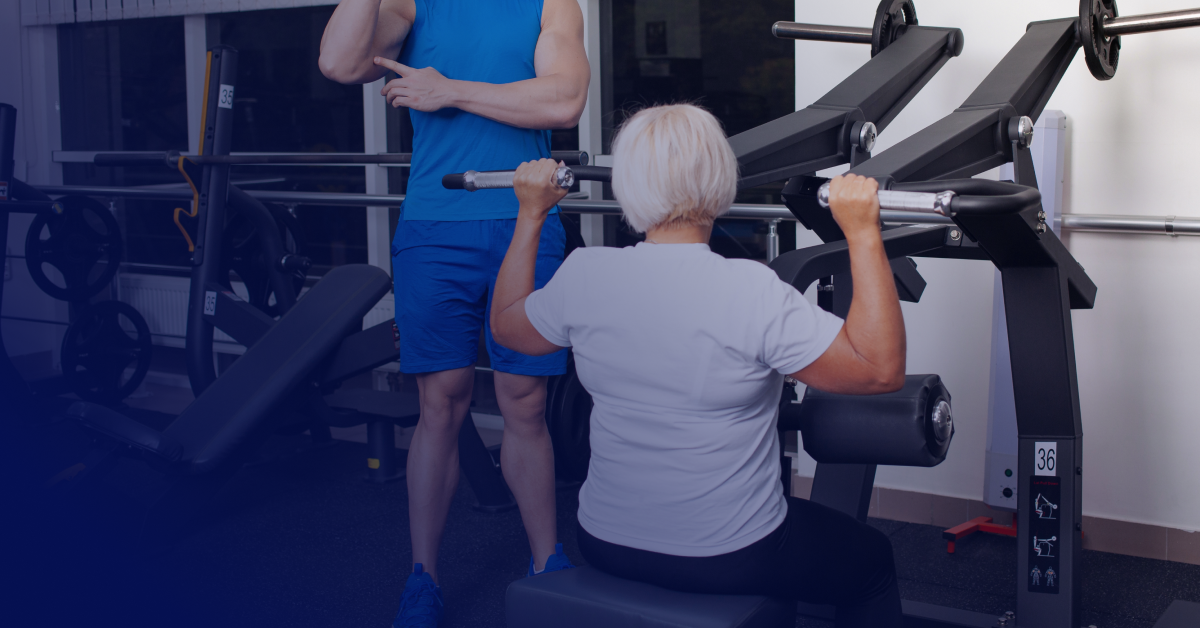
Strength training is sometimes treated as an optional addition to cardiovascular exercise, but it has particular value for bone health. Resistance training creates forces through bone as muscles work against an external load, which can come from free weights, machines, resistance bands, or your own body weight. [1]
A large 2023 systematic review and meta-analysis involving more than 5,500 postmenopausal women found that exercise training had positive effects on bone mineral density at the lumbar spine, femoral neck, and total hip. The results also showed an important reality about bone research: different exercise programs produce different effects, and there is not one simple workout that applies equally to everyone. [2]
If you are new to strength training, this does not mean you need to immediately begin lifting heavy weights. Progressive resistance means starting at an appropriate level and gradually increasing the challenge as your strength and technique improve.
ASPT's guide to calisthenics vs. weightlifting explains how both body-weight exercise and external resistance can be used to build strength. For bone health, the important issue is providing enough progressive challenge while choosing exercises you can perform safely and consistently.
Does Exercise Have to Be High-Impact?
Not for everyone, and this is where interpreting research requires some caution.
Bones respond to mechanical load, so activities that create greater force can provide a stronger stimulus than very low-load exercise. Research in postmenopausal women suggests that higher-intensity exercise can produce greater improvements in lumbar spine bone mineral density than lower-intensity exercise. [5]
The LIFTMOR trial is one of the better-known examples. Researchers studied postmenopausal women with low bone mass who completed a supervised program combining high-intensity resistance exercise with impact loading. Participants improved measures of bone strength and physical function compared with a lower-intensity exercise group. Importantly, this was a structured program performed under close supervision in selected participants. [3]
That does not mean everyone with osteopenia or osteoporosis should start jumping or performing heavy barbell exercises on their own. Someone with a history of vertebral fracture, significant osteoporosis, balance problems, joint pain, or little resistance-training experience may need a very different starting point.
The lesson from the research is not “the heavier the better.” It is that bones need an appropriate training stimulus, and the safest effective level of that stimulus varies from person to person.
Why Progressive Loading Matters
Doing the same easy exercise with the same resistance indefinitely may be enough to maintain a habit, but it may stop providing much of a training challenge as your body adapts.
Progressive exercise gradually changes the demand. Depending on the person and the exercise, that might mean increasing resistance, adding repetitions, improving movement quality, progressing from supported to unsupported movements, or eventually adding a higher-impact activity when appropriate.
For example, a strength progression might begin with a sit-to-stand from a chair before advancing to squats and then to more heavily resisted variations. A person working on lower-body loading may begin with controlled step-ups before progressing to more demanding movements.
A physical therapist can help determine when an exercise has become too easy and when increasing the load would be useful. Just as importantly, a therapist can recognize when adding more load would create unnecessary risk.
Bone Strengthening Is Not Just About Your Legs
Walking and stair climbing primarily load the lower body. A complete strength program can challenge additional areas of the skeleton by training the upper body, trunk, hips, and legs.
Exercises may include movements such as:
- Squats or sit-to-stands
- Step-ups
- Lunges when appropriate
- Rows
- Chest presses or push-ups
- Overhead pressing when appropriate
- Hip strengthening
- Loaded carries
- Calf raises
The exact exercise matters less than whether it is appropriate for your current health, technically sound, and progressively challenging.
Someone exercising primarily for general prevention will also need a different program than someone who already has osteoporosis or is returning to activity after a fracture. That is one reason online lists of “the best exercises for osteoporosis” can be misleading. The diagnosis, fracture history, balance, strength, joint health, and previous exercise experience all affect what is safe.
Do Balance Exercises Make Bones Denser?
Balance training is important for bone health, but not primarily because it increases bone mineral density.
Its major value is fracture prevention. Better balance and coordination can reduce the likelihood of falls, particularly as people get older. The National Institutes of Health therefore recommends balance training alongside weight-bearing and resistance exercise, especially for older adults. [1]
A bone-health exercise plan may include single-leg balance exercises, step-ups, controlled lunges, direction changes, or other drills selected according to the patient's ability. If balance is already impaired, the exercises should begin with enough support to make them safe.
This is an important distinction. Bone density is one part of fracture risk. Strength, balance, mobility, and the ability to safely recover from a loss of balance matter too.
What If You Already Have Osteopenia or Osteoporosis?
Exercise remains important, but it should become more individualized.
If you have been diagnosed with low bone density, osteoporosis, or a previous fragility fracture, the safest program depends on more than your age. Your bone density results, fracture history, balance, strength, joint health, medications, and previous training experience all influence what you should do.
NIAMS recommends talking with a healthcare professional before starting a new exercise program if you have low bone density, osteoporosis, or other physical limitations. [1] This is particularly important before introducing high-impact movements or unfamiliar heavy resistance.
Our companion NY Bone & Joint Specialists article, Bone Density After 40: What You Can Do Now to Prevent Fractures Later, explains when bone density screening may be appropriate and which medical and lifestyle risk factors should be considered alongside exercise.
How Physical Therapy Can Help Build a Bone-Healthy Exercise Program
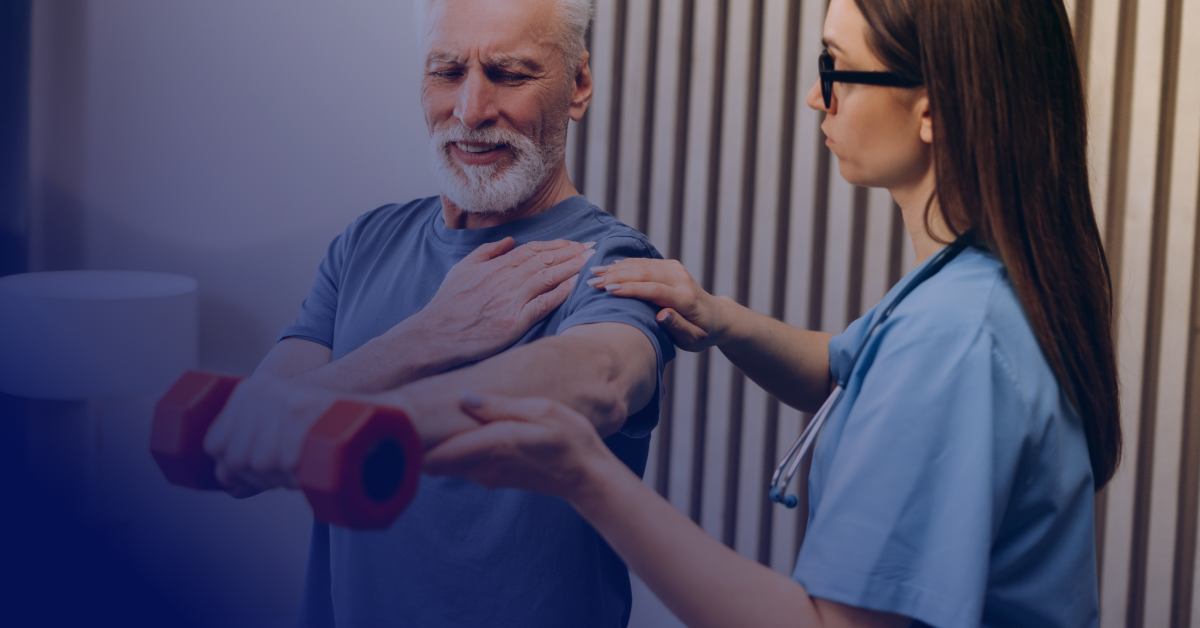
Physical therapy is not only for recovering from an injury. A physical therapist can also help someone who needs a safe way to become stronger, increase weight-bearing activity, or return to exercise after a period of inactivity.
An assessment may look at:
- Current strength
- Balance and fall risk
- Joint mobility
- Walking mechanics
- Previous fractures or orthopedic injuries
- Exercise experience
- Activities you want to return to
- Movements that currently cause pain or difficulty
From there, exercise can be progressed according to what your body can safely tolerate.
For one person, that might mean gradually adding resistance to squats and step-ups. For another, the priority may be improving balance and lower-body strength before increasing impact. Someone with joint pain may need modifications that provide useful skeletal and muscular loading without repeatedly aggravating the painful joint.
All Sports Physical Therapy provides individualizedphysical therapy, sports medicine, orthopedic rehabilitation, and return-to-activity services at our Upper East Side and Midtown Manhattan locations.
The Best Bone Health Workout Is Not One Exercise
If you are looking for one perfect exercise to protect your bones, the research does not really point to one.
Walking is useful, but walking alone may provide a limited bone-density stimulus. Resistance training matters. Weight-bearing activity matters. Higher loading may provide a stronger stimulus when it is appropriate and safely performed. Balance training addresses another major part of fracture prevention by reducing fall risk. [1][2][3][4]
The most useful program combines those pieces based on your current health and ability, then progresses them over time. That approach also makes exercise more sustainable because it focuses on what your body needs rather than forcing everyone into the same routine.
If you have low bone density, are returning to exercise after an injury, or are unsure how to safely add resistance and weight-bearing activity, the physical therapists at All Sports Physical Therapy can help build a program around your starting point and goals.
Call (212) 759-8899 or book an appointment at our Upper East Side or Midtown Manhattan location.
Frequently Asked Questions
What is the best weight-bearing exercise for bone health?
There is no single best weight-bearing exercise for everyone. Brisk walking, stair climbing, running, dancing, and racket sports are all weight-bearing activities, while resistance training provides an additional bone and muscle stimulus. Research and current NIH guidance support using a combination of weight-bearing, resistance, and balance exercise rather than relying on one activity alone. [1][2]
Is walking enough to prevent osteoporosis?
Walking is beneficial weight-bearing exercise, but walking alone may not provide the strongest possible stimulus for maintaining bone mineral density. Research in peri- and postmenopausal women has found limited effects from walking-only programs at several skeletal sites, which is one reason strength training is an important addition to a bone-health routine. [4]
Does lifting weights increase bone density?
Resistance exercise can help maintain bone health, and studies in postmenopausal women have shown positive effects of exercise training on bone mineral density. The response varies with the exercise program, training intensity, duration, and skeletal site being measured. [2]
Are body-weight exercises good for bones?
Yes, body-weight movements can be used as resistance exercises and may be an appropriate starting point for many people. Squats, lunges, step-ups, push-ups, and similar movements require muscles to work against resistance. As strength improves, additional resistance may eventually be needed to continue challenging the body. [1]
Is high-impact exercise safe if I have osteoporosis?
High-impact exercise is not automatically appropriate for everyone with osteoporosis. Supervised research has shown that selected postmenopausal women with low bone mass can safely perform high-intensity resistance and impact training, but those results should not be interpreted as permission to begin a heavy or high-impact program without an individual assessment. [3]
Does swimming help bone density?
Swimming is excellent cardiovascular exercise, but it is not considered weight-bearing because the water supports much of your body weight. Someone who enjoys swimming can continue to use it for fitness while adding appropriate weight-bearing and resistance exercise to provide a different stimulus to the skeleton. [1]
How often should I strength train for bone health?
General federal physical activity guidance recommends muscle-strengthening exercise involving the major muscle groups at least two days per week for adults. Your ideal frequency, resistance, and exercise selection may differ if you have osteoporosis, a previous fracture, pain, or another medical limitation. [1]
Peer-Reviewed Clinical References
[1] National Institute of Arthritis and Musculoskeletal and Skin Diseases. Exercise for Your Bone Health. National Institutes of Health.
[2] Mohebbi R, Shojaa M, Kohl M, et al. Exercise Training and Bone Mineral Density in Postmenopausal Women: An Updated Systematic Review and Meta-Analysis of Intervention Studies With Emphasis on Potential Moderators. Osteoporosis International. 2023;34:1145–1178.
[3] Watson SL, Weeks BK, Weis LJ, Horan SA, Beck BR. High-Intensity Resistance and Impact Training Improves Bone Mineral Density and Physical Function in Postmenopausal Women With Osteopenia and Osteoporosis: The LIFTMOR Randomized Controlled Trial. Journal of Bone and Mineral Research. 2018;33(2):211–220.
[4] Ma D, Wu L, He Z. Effects of Walking on the Preservation of Bone Mineral Density in Perimenopausal and Postmenopausal Women: A Systematic Review and Meta-Analysis. Menopause. 2013;20(11):1216–1226.
[5] Kistler-Fischbacher M, Weeks BK, Beck BR. The Effect of Exercise Intensity on Bone in Postmenopausal Women: A Systematic Review and Meta-Analysis. Bone. 2021;143:115697.