Common Ice Skating Injuries (and How to Avoid Them)
Sports Medicine, Ankle Injuries, Foot Injury, Hand Injuries, Arm Injuries
Taking to the ice rink as the weather gets colder is a seasonal favorite for many. Whether you’re hitting the rink for the new ice hockey season or planning on some holiday cheer with the kids, ice skating offers a unique blend of exercise, artistry, and pure fun.
However, ice is slippery, and ice skating injuries are common as the end of the year approaches. Everyone, from first-time skaters to seasoned competitors, experiences mishaps on the ice.
While ice skating injuries are common, most are preventable with the right precautions. Understanding what can go wrong and how to protect yourself means you and your family can enjoy the best of the rink while remaining safe on the ice.
Let’s discuss common ice skating injuries and how we can take steps to prevent them.
Understanding Ice Skating Injury Risks
Ice skating injuries can affect people of all ages and skill levels. Though beginners are most at risk of injuring themselves on the ice. First-time skaters face regular falls as they develop balance and coordination. That said, you can still learn how to fall correctly in a way that lessens the impact and the chance of serious injury.
Here are some of the common ways ice skating injuries occur:
- Falls. Falls are a common part of learning to skate. Even pro-athletes fall occasionally.
- Collisions. Crowded seasonal ice skating rinks and holiday events often see many beginner skaters take to the same rink, increasing the likelihood of collisions between skaters.
- Environmental factors. Ice conditions vary from session to session and rink to rink. Rough, choppy ice from heavy use can catch blade edges unexpectedly.
- Equipment. Poorly fitted skates provide inadequate ankle support, increasing the risk of both ankle injuries and falls. Dull blades don't grip properly, while overly sharp blades can catch unexpectedly.
- Age. Children and older adults are often more susceptible to bone fractures and breaks due to developing or weaker bones.
- Level. Beginners face injury risks primarily from falls and collisions at relatively low speeds. Competitive figure skaters and ice dancers perform high-impact jumps and complex maneuvers that create different risks, including overuse injuries from intense training schedules.
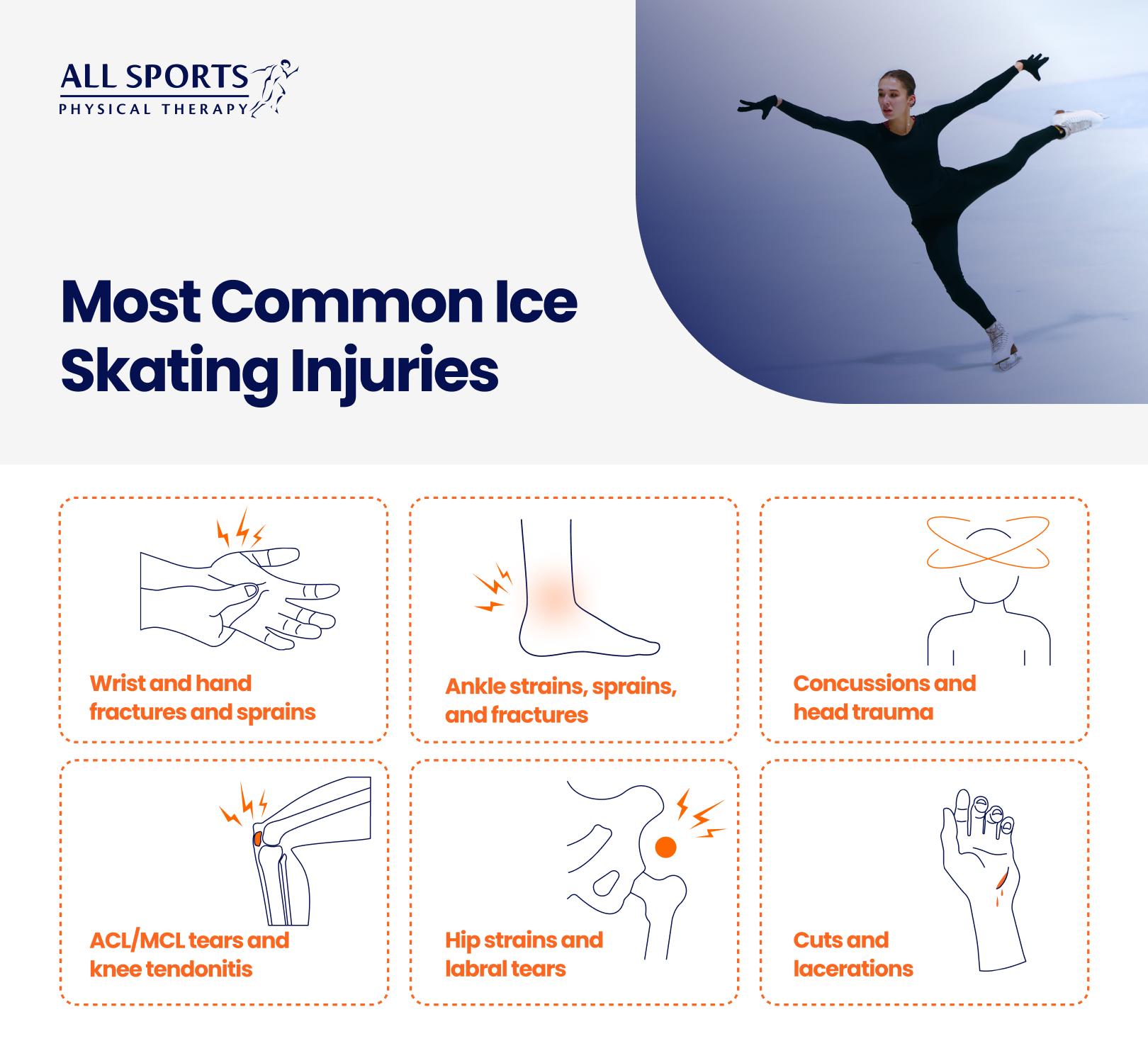
Most Common Ice Skating Injuries: What to Watch For
Knowing what injuries to watch for helps you recognize problems early and take appropriate action.
Wrist and Hand Injuries
It’s normal to want to try and catch yourself as you fall. However, putting your hands out to stop your slip can increase the risk of hand and wrist injuries.
Wrist fractures range from simple breaks that heal well with casting to more complex injuries requiring surgery. The scaphoid bone in the wrist is particularly vulnerable—it's a small bone that's often fractured in falls but can be missed on initial X-rays, leading to complications if not properly treated. Sprains, where the ligaments overstretch and tear, are also common hand injuries during falls. These injuries can take weeks to heal fully.
Beginners are especially vulnerable to wrist injuries because they haven't yet developed the muscle memory to protect themselves better during falls. This is one reason wrist guards are strongly recommended for anyone learning to skate.
Ankle Injuries: The Skater's Achilles Heel
Ankle accidents are among the most common ice skating injuries. Despite the support offered by skating shoes, poorly fitting or inadequately supported skates are a leading cause of these types of injuries.
Ankle fractures can occur from falls, particularly when the foot twists awkwardly. These injuries are more common when skates are laced too loosely, providing insufficient stability, or when worn-out boots have lost their structural integrity.
Repetitive ankle injuries can cause chronic instability in the joints. Each sprain stretches ligaments that may not fully tighten again, leaving the ankle prone to future injuries.
Head Injuries and Concussions
Head injuries are among the worst possible ice skating injuries due to their potential for serious consequences. Falling backward onto the hard ice can result in significant head trauma, and the smooth surface provides no cushioning to reduce impact.
Concussions—traumatic brain injuries that temporarily affect brain function—can occur even without direct impact if the head accelerates and decelerates rapidly during a fall.
Symptoms include:
- Headache
- Confusion
- Dizziness
- Nausea
- Balance problems
- Memory issues
Any suspected concussion requires immediate medical evaluation and complete rest until cleared by a healthcare provider.
It’s important to protect yourself while on the ice. Helmets are a great choice for protecting your brain from potential damage. While helmets aren't commonly seen on adult recreational skaters at public sessions, they dramatically reduce the risk of serious head injury and are worth considering.
Knee Injuries
The knee is a complex joint susceptible to ice skating injuries. Twisting falls can tear the anterior cruciate ligament (ACL) or medial collateral ligament (MCL), injuries that often require surgical reconstruction and months of rehabilitation.
Knee tendonitis, also called “jumper’s knee”, is also a common occurrence among professional skaters. The injury is caused by repetitive movements, like jumps and pivots, which wear down muscle tissue over time. The repetitive loading of landing jumps can inflame the tendon connecting the kneecap to the shinbone. This overuse injury develops gradually and can become chronic if training continues without modification.
Hip and Groin Injuries
The back-and-forth motion of skating places additional strain on the hip joint. Adductor strains—pulls of the inner thigh muscles—are common because the skating stride requires these muscles to work constantly to bring the leg back under the body after each push.
Hip flexor issues can develop from the repetitive flexing of the joint required during skating, particularly if you’re pivoting or skating at speed regularly. This issue is common among hockey players. The regular flexing wears down the joint over time, causing pain and inflammation.
Labral tears—damage to the cartilage ring around the hip socket—can occur in advanced skaters performing complex movements, particularly those requiring pivots and rotation, as in figure skating. These injuries typically develop gradually and may not be immediately noticeable until the pain is intense.
Growth plate concerns are relevant for young, competitive skaters whose bones are still developing. The repetitive stress of skating can affect growth plates, particularly in the hip, requiring careful monitoring and sometimes training modifications.
Cuts and Lacerations
Skate blades are sharp, and blade-related injuries can range from minor cuts to severe lacerations requiring emergency treatment. These ice skating injuries typically occur during falls when a skater's blade contacts their own or another person's skin, or during collisions when blades make contact.
Overuse Injuries in Competitive Skaters
Competitive figure skaters, dancers, and ice hockey players face different injuries than recreational skaters.
The intense training schedules and repetitive high-impact movements can lead to overuse injuries that develop gradually over time. Including:
- Stress fractures can occur in the feet, shins, or even the spine from repetitive loading that exceeds the bone's ability to remodel and strengthen.
- Tendonitis can affect multiple sites, with Achilles tendonitis and patellar tendonitis being especially common. The inflammation develops from repetitive stress without adequate recovery time.
- Lower back pain is prevalent among skaters who perform frequent jumps and spins. The landing forces and rotational movements stress the spine, and the flexibility requirements can contribute to instability.
These overuse injuries require a different approach than acute trauma. Modifying your training schedule and incorporating adequate rest periods can help reduce the risk of overuse injuries, such as strains and sprains.
Ice Skating Injury Prevention: Staying Safe on the Ice
Most common ice skating injuries are avoidable with proper precautions and smart skating practices.
Proper Equipment and Fit
Your skates are your most important piece of equipment, and proper fit is non-negotiable for ice skating injury prevention.
- Well-fitted skates should provide firm ankle support without being painfully tight.
- Your heel should stay firmly in place without lifting when you flex forward, and your toes should have just enough room to wiggle without sliding forward.
Skates that are too large allow for overflexing in your ankle and make it difficult to skate safely. Skates that are too small create pressure points and can cut off circulation to the feet.
Other important safety considerations include:
- Correct lacing. The boot should be snug but not restrictive around the forefoot, tighter through the ankle for support, and slightly looser at the very top to allow for easy movement.
- Wearing a helmet. Protecting your head from falls and collisions is essential and can reduce the risk of severe injury.
- Using wrist, knee, and elbow pads. Padded supports can protect your joints from falls, fractures, and overextensions.
- Maintaining your skating blades. Keeping your equipment, especially skating blades, in good condition ensures you aren’t adding extra risk to your skating activities.
Learning Proper Technique
Taking lessons from qualified instructors is one of the most effective forms of ice skating injury prevention. Professional coaches teach not just skating skills but also crucial safety techniques like how to fall correctly.
Learning to fall safely is a skill in itself. The instinct to catch yourself with outstretched arms leads to wrist injuries. Instead, proper falling technique involves tucking your arms, rolling to your side, and avoiding backward falls onto your tailbone or head. These techniques become automatic with practice and significantly reduce injury severity when falls do occur.
Proper skating posture and balance reduce fall risk in the first place. Skating with knees slightly bent, weight forward over the balls of your feet, and arms out for balance creates a more stable position than standing upright and stiff.
Each skating skill builds on previous ones, and attempting advanced moves before mastering the basics increases injury risk dramatically. Don’t attempt a triple jump before you can stay upright on the skates.
Warming Up and Conditioning
As with any form of exercise, warming up is a great way to cut the risk of potential muscular injury. Make sure you stretch and engage in light cardio, like walking, for at least ten minutes before you take to the ice.
Rink Awareness and Smart Skating
Environmental awareness is crucial for avoiding common ice skating injuries from collisions and falls. Always watch for other skaters, particularly in crowded public sessions. Keep your head up and maintain awareness of your surroundings rather than staring at your feet.
Recognizing and Respecting Limits
One of the most important aspects of ice skating injury prevention is knowing when to call it a day. Skating when fatigued significantly increases injury risk because tired muscles don't support joints as effectively, and reaction times slow.
Take regular breaks during long skating sessions. Even experienced skaters benefit from stepping off the ice periodically to rest and hydrate.
Gradual progression in difficulty applies to both learning new skills and increasing skating duration or intensity. Don't attempt to learn a new jump when you're already tired from an hour of skating. Don't suddenly double your usual skating time because you're having fun.
Listen to your body's warning signs. Pain during skating (as opposed to mild muscle fatigue after) suggests something's wrong. Persistent discomfort that doesn't resolve with a brief rest warrants attention before it becomes a more serious problem.
Competitive skaters need particular attention to rest and recovery. The demands of intensive training require planned recovery time, and ignoring fatigue or minor pain often leads to more significant overuse injuries.
Environmental Considerations
Indoor rinks provide more controlled conditions than outdoor skating, with consistent ice quality, lighting, and temperature. Outdoor rinks offer unique experiences but come with additional considerations.
Weather affects outdoor ice quality significantly. Warm temperatures can soften ice, creating unsafe conditions. Snow or rain can also alter the ice surface, turning it into a dangerous slush. Be alert to your surroundings when on the ice and make adequate judgments as to the weather and surface conditions as you go.
What to Do If You Get Injured While Ice Skating
Despite your best prevention efforts, ice skating injuries can still occur. Knowing how to respond appropriately can make a significant difference in outcomes.
If you experience an ice skating injury while on the ice, your priority is getting to a safe location away from other skaters. If you can't move on your own, signal for help and wait for assistance—attempting to move with a serious injury can worsen damage.
For most acute injuries, the RICE protocol provides appropriate immediate care:
- Rest. Stop skating immediately and avoid bearing weight on the injured areas
- Ice. Apply ice to reduce swelling and pain (most rinks have ice readily available)
- Compression. Gentle compression with an elastic bandage can help control swelling
- Elevation. Elevate injured limbs above heart level when possible
Some ice skating injuries require immediate emergency medical attention:
- Any head injury with confusion, loss of consciousness, persistent headache, vomiting, or behavior changes
- Severe pain or visible deformity suggesting a fracture
- Inability to bear weight on a lower extremity
- Deep cuts from skate blades, particularly if bleeding is difficult to control
- Suspected neck or back injuries
Other injuries should be evaluated by a sports medicine specialist within a few days:
- Pain that persists beyond initial first aid
- Swelling that doesn't improve with the RICE protocol
- Reduced range of motion in joints
- Instability or feelings of joints "giving way"
- Any injury that prevents normal activities
Don't try to "tough it out" or assume minor injuries will resolve on their own. Early professional evaluation and treatment typically mean faster recovery and fewer complications. Many seemingly minor injuries can become chronic problems if not properly addressed.
Our All Sports physical therapists and orthopedic specialists have decades of experience in treating sporting injuries of all kinds and can work with you throughout your recovery journey.
Returning to Ice Skating After Injury
If you're currently sidelined with an ice skating injury, the road back to the ice requires patience and proper progression. Rushing recovery is one of the most common mistakes that leads to re-injury or chronic problems.
Consider working with a physical therapist to aid your recovery. One of our team members can help you put together a treatment and exercise plan to help rebuild strength and flexibility after your injury. These exercises aren't optional. They're rebuilding the strength, flexibility, and control you need to skate safely again.
Physical therapy for ice skating injuries typically progresses through phases: first controlling pain and inflammation, then restoring range of motion, building strength, improving balance and proprioception, and finally returning to sport-specific activities.
When cleared to return to skating, start gradually. You might begin with just stepping onto the ice and standing, progressing to slow gliding before attempting any complex movements. Listen to your body—mild discomfort may be acceptable, but sharp pain or significant discomfort means you're progressing too quickly.
Keep up with strengthening programs targeting areas related to your injury. For example, if you experienced an ankle injury, continuing ankle strengthening exercises even after full recovery helps protect against future problems.
Enjoy Ice Skating Safely
Ice skating injuries are a real concern, affecting thousands of skaters each year. But understanding common injuries and their prevention doesn't mean you should avoid this wonderful activity; it means you can approach it with knowledge and confidence.
The vast majority of ice skating injuries are preventable with proper equipment, technique, environmental awareness, and respect for your limits. A well-fitted pair of skates, helmet use (especially for children and beginners), skating lessons that teach proper technique and falling skills, and smart rink behavior dramatically reduce injury risk.
When ice skating injuries do occur, early professional evaluation and proper treatment lead to better outcomes. If you're experiencing persistent pain or have suffered an ice skating injury, consult with sports medicine professionals who can provide expert diagnosis and treatment. All Sports Physical Therapy specializes in treating and preventing skating-related injuries, helping athletes of all levels get back on the ice safely.
So lace up those skates, put on that helmet, and enjoy the unique pleasure of gliding across the ice. With the right precautions and awareness, you can make ice skating a safe, enjoyable part of your winter activities for years to come.
Contact us to stay healthy on the ice.
Frequently Asked Questions
What are the most common ice skating injuries?
Wrist fractures and sprains are the most common injuries because people instinctively put their hands out to break a fall. Ankle sprains, knee injuries, and bruises around the hips and tailbone are also frequent, especially in new skaters. Head injuries can occur if you fall backward and hit the ice. You can lower your risk by using proper protective equipment, learning how to fall safely, and taking time to build good technique.
How can I prevent ankle injuries while ice skating?
Start with skates that fit snugly, provide firm ankle support, and are laced correctly from toe to top. If the boot is too loose or too soft, the ankle can roll and strain more easily. Strengthening exercises for the calves and ankles, done off the ice, build stability and control. On the ice, keep a slight bend in your knees, your weight centered over the skates, and avoid sudden sharp turns until your balance improves.
Do I need to wear a helmet for ice skating?
Helmets are strongly recommended for children, beginners, and anyone practicing new skills or skating in crowded rinks. A properly fitted helmet can greatly reduce the risk of serious head injury from backward falls or collisions. Even experienced skaters can benefit from a helmet when learning jumps, spins, or more advanced moves.
What should I do if I fall and hurt myself while ice skating?
First, move carefully to the side of the rink or a safe area so you are away from other skaters. For most minor injuries, follow the RICE approach: rest the injured area, apply ice, use compression if advised, and elevate if possible. Seek immediate medical care if you hit your head, lose consciousness, have severe pain, notice a visible deformity, or cannot put weight on the injured limb. If pain, swelling, or stiffness continues after a day or two, schedule an appointment with a sports medicine or orthopedic specialist to rule out a more serious injury.